Letter J Labs

A hard-tech startup building
IoT products.

We envision IoT infrastructure that feels completely custom, yet deploys at scale across industries. A system that advances operations, builds community, and is always online. Regardless of the project, we design with a focus on this vision.


The LTRJ Labs bench in Victoria, BC
Fig. 1 — The bench, Victoria, British Columbia, 2026.
1Flagship system
First deployed system

MothNode

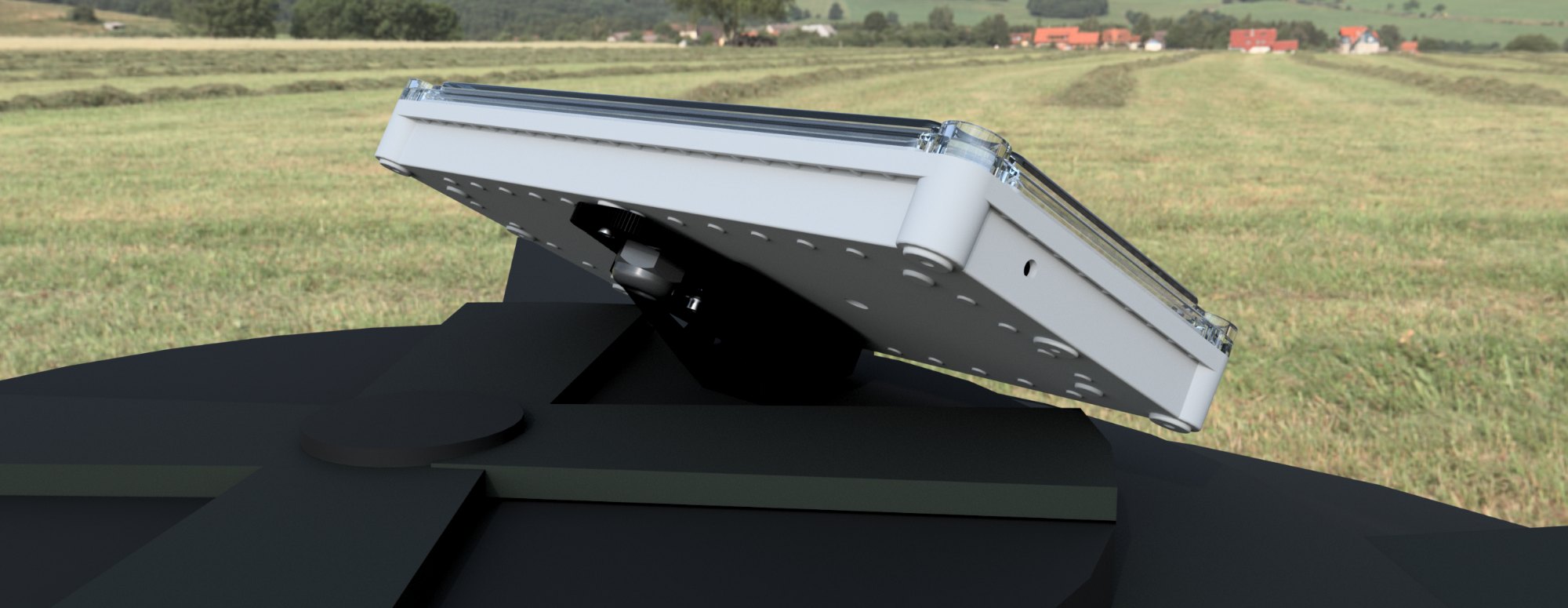
Render of MothNode Rev 3.0, view 1Render of MothNode Rev 3.0, view 2
Fig. 2 — MothNode Rev 3.0, renders.

Remote Tank Monitor inspired by volunteer firefighting.

Zero-maintenance, solar-powered, multi-network telemetry. Runs year-round in all weather conditions.

Launch MothNode Platform
2The lab notebook
Milestones

Timeline

  1. Concept

    Water-supply blind spot surfaced at Willis Point Fire Dept.

    Done
  2. R1 arrival

    Rev 1 on the bench for first tests.

    Done
  3. R2 arrival

    Rev 2 deployed on active rural water cisterns.

    Done
  4. R3 arrival

    Custom PCBA (ESP32-S3, BG95 cellular, LoRa) and polycarbonate IP66 tooling.

    Done
  5. Pre-compliance & design finalization

    Regulatory testing (ISED / FCC) at Camosun College while the production design is locked.

    Now
3Field appearances

Events

DEC182026 · Fri

Camosun Capstone Symposium

Final R3 Demo & Presentation

Victoria, BC
4Who we are

Team

  1. Portrait of Levi Puritch
    A.

    Levi Puritch

    CEO & Designer

    Owns project coordination and communications, translates complex engineering problems into clear technical solutions.

  2. Portrait of Jaxon Bjornson
    B.

    Jaxon Bjornson

    CTO & Designer

    Reviews hardware design and specializes in custom firmware, microcontroller peripherals, and automation.

5Direct signal

Get in touch

Email
LocationVictoria, British Columbia

Project Origin and Motivation

Levi Puritch, the Co-Founder and CEO of LTRJ Labs is a volunteer fire fighter at Willis Point Volunteer Fire Dept. MothNode’s development began in May of 2026, following an ongoing issue with the department’s water tanks in Willis Point being brought to his attention. Their main issues were tanks leaking only up to a certain level, then stopping, as well as tanks struggling to stay maintained due to crews only dedicating 2 hours a week for maintaining all the department’s equipment, alongside training.

The use of these water tanks is critical in this industry for effective firefighting. A good benchmark of reliability and function for these tanks is to compare it to a regular fire hydrant in an urban area. What is expected of it? A short list being, near infinite supply of water, any department can use them, uniform interface, and it’s location to be known and documented. Fire Protection Infrastructure specifically qualifies new functionality to be brought to the table for tank monitoring for this reason.